The Melting Watch
/“Want to come to my funeral?” I asked my husband.
He peered at me above his copy of the latest book that proved Shakespeare was really Sir Francis Bacon. We were in separate beds in Barcelona because I have an allergic reaction to his snoring off American soil. Yesterday we had stared up at the Salvador Dali Museum with its exterior walls dotted with loaves of bread. Today I was inviting him to my funeral. Next Tuesday we will have been married thirty-eight years. He was almost used to me by now.
“It depends on when it is.” He shifted his left haunch around, which meant his sciatica was acting up. I pretended not to notice so as to let him age with dignity.
“Six o’clock next Wednesday. Probably. There’s a lot I have to get done by then.”
He laid his book down on the mattress as if bedding a lover. Carefully and with precision. His slender fingers brushed its cover, and I remembered the thrill of those fingers when we first met. Over the years those fingers had stroked our children’s foreheads, stir-fried flank steak and washed my toes when I couldn’t reach them after breaking my kneecap.
“Kind of you to hold off on the funeral until after our anniversary.” He rolled towards me over the crack between our beds, as if to give me a hug. I jumped up to find my iPad.
“I’ll make the guest list now,” I said, riffling through my suitcase where I’d hidden the iPad under granny panties that washed out in a sink. “I don’t want you to do a thing but look handsome and grieve.”
***
We’d found the Dali Museum through a guidebook in our search for a day trip from Barcelona. The train was to take us to Girona where our local tour guide would pick us up and drive us to the Dali Museum in Figueres. Miguel was easy to spot. He was the only person walking towards us and pointing to his watch. He was also tall with a soccer player’s body. I wondered if he’d ever washed a woman’s toes.
“We have to hurry,” Miguel said by way of introduction. “I bought the last two tickets and if we are late, they won’t let us in.”
A half hour later we stood in front of an old red mansion ringed with full-body sculptures along the roofline, balancing outsized baguettes on their heads. Carved buns sprouted on the outer walls in further homage to gluten. Miguel elbowed us past the lines of tourists as if he were on his way to score a goal. We leapt inside just before our entry tickets expired.
Miguel shifted into tour guide mode. “Dali bought this house and turned a crumbling building into something beautiful,” As we followed him across the courtyard, we encountered a parked 1930s car at its center. The car reminded me of a gangster’s spats, with a long black body and a white top. A towering stone fertility goddess stood cabled to its hood, her engorged nipples pointing the way deeper into the museum. Her warrior’s helmet towered high, and with her shoulders thrown back, her naked body dominated the courtyard without shame.
As for me, I drew my shawl tighter over my exposed shoulders in the warming air—the better to shroud my drooping upper arms, flesh grooved by the highways of time. I noticed the car’s passenger side window was bashed in. As the sun came into full blaze overhead, it began to rain. Inside the car. We were indeed in Daliland, a place as weird as getting older in a woman’s body.
***
Back in Barcelona that night at dinner, eating on the Ramblas, my husband ordered fried anchovies. Though we were dining outside, I was repulsed by the smell when the waiter delivered them with a flourish. The waiter frowned when he plunked down my order of tomato toast, as if I were the one guilty of ordering something malodorous. My husband cut the heads off the anchovies with his sensitive fingers gliding the knife back and forth. Beautiful couples strolled by us down the wide promenade, many arm in arm and in various stages of undress in the warm spring evening. Their bodies shimmered in the gloaming.
“What are you dying of?” my husband asked. “Or have you taken out a hit on yourself?” He smirked and bit the tail of a tiny fish with a crunch. I winced.
I crunched my crisp toast in response and took my time chewing. How to explain to my husband that it wasn’t the sixty-something me we would be eulogizing? Now that I’d slalomed past middle-age, I couldn’t bear to think it was all downhill from here. Perhaps having a funeral for the young woman I’d been, the one he’d met when I was twenty-seven, the more fully I could let go and embrace the woman I was becoming.
My husband had known that girl with her flying jet-black hair and wild confidence—who looked like Cher if you squinted. We’d been married two years when “Moonstruck” hit the theaters. Back then, he often quoted a line from the movie.
“Ti amo,” he’d spout out of the blue. Ti amo is Italian for, “I love you.”
He hadn’t ti amoed my ass in years.
While we finished eating, a young woman in a skin tight brown dress wafted by on the arm of her suitor. Her short, slicked back hair reminded me of a seal, and her suitor, the rocks upon which she basked. So many years ago, I had been her.
I missed the power I once had. The days when I carried the pheromones of my youthful beauty as if in a leaky Chanel bottle, my scent drawing men to me without them fully knowing why.
***
Miguel had explained that Dali designed sets for Broadway plays and big windows for New York department stores. Dali gave the same care to each space inside his museum to create a unique experience room to room. We pushed past massive reflective glass doors into one of them: a petite chamber with the red velvet walls of an upscale whorehouse. A few select pieces of jewelry designed by the master were displayed under glass domes, each atop its own pedestal. We had stepped inside a jewelry box.
A gold brooch crafted in the shape of a branch glittered. I drew closer. My breath caught when I noticed a melting watch encrusted with diamonds drooping over the branch. Before I met my husband, I owned a necklace with a pendant that was a replica of the melting watch in front of me. I’d first spotted the watch draped over a branch in Dali’s painting “The Persistence of Memory.” I read recently that Dali said the melting watch captured, “the camembert of time.”
I’d discovered this odd masterpiece when I was twenty-five. Back then my friends didn’t tattoo their flesh to express themselves, to show the world what was important to them and who they were. The melting watch pendant had been my tattoo, my way to say that I’m as special, as weird as this watch. And proud of it.
Now, in the Dali Museum, the melting watch spoke to me in a way I couldn’t hear when I was in my twenties.
“My dripping is ironic,” the pendant had said then. I know. I’d heard its voice. “You will be forever young. Time is but a human construct.”
And with the omniscience of the young, I had fallen for it.
The diamond-rimmed watch in the display case had no hands. I looked down at my own hands. When had the veins begun to pop out in a web of blue-gray? There were so many they obscured any supple flesh that once displayed itself for the sole purpose of being caressed. Then I caught myself in the reflection of the unforgiving glass door. The skin on my neck draped in concentric circles. I felt as if I were an old necklace buried in this jewel box of a room.
While my husband barked a laugh at something Miguel said, one tiny diamond tear dripped off the melting watch beneath the glass dome.
.
***
On our last night in Barcelona, we decided to stay in. Our hotel room was so small that I had to sidle along the edges of the beds to get to the bathroom. The bathroom was even tighter with only enough space to brush my teeth, shower, and pee but not enough to change into my ratty REI T-shirt and gym shorts for bed. If I sat down on the toilet to untie my shoes, my head would clunk on the sink basin. I knew that from experience.
I couldn’t remember the last time I’d undressed in front of my husband at home. There, I pulled on my cobbled together parts of old pj’s in the bathroom before slipping beneath covers in a darkened room. The previous nights in this hotel, I’d slipped the familiar T-shirt over my head while facing a corner.
My husband lounged on the hotel bed and stared at his Shakespeare book with an intensity with which he used to gaze at me. I’d forgotten that look. I’d forgotten I used to undress to draw that gaze to me—my bras a flirtation of black lace—in the time before childbirth and gravity had their way.
Over the years since then, my bras have been purchased to address more practical matters such as drooping and jiggling. The bras I wore to Barcelona had to be prepared to run towards airplane gates and swerve away from pick pockets. I caught sight of myself in the hotel mirror. My solid black band of a bra resembled Frieda Kahlo’s eyebrows.
My husband licked his forefinger and swiped to the next page of his book. I took a deep breath, faced him, and unhinged the unibra.
“Did you know that Bacon was a militant atheist?” my husband asked without looking up.
I yanked the old T-shirt over my head and grabbed my bra from the floor where it had landed, gazing up at me with sorrowful, utilitarian sensibility in both its round eyes. Cracking open the window in the stifling room, I lingered, watching the sliver of a moon to see if I could catch the moment before it disappeared.
***
At the airport, waiting for our flight back to Seattle, I tossed peanut M&Ms into my mouth. What did it matter how much my 80s fanny pack of a stomach expanded? My time as a woman who could incite vehicular manslaughter just by undulating down the street in a tight dress was over.
My husband was flipping through the pictures on his phone. His elegant fingers hovered, then stopped. “I love this one,” he said.
He turned the screen towards me. I expected to see a Gaudi building, its curved lines those of an alluring woman. I knew my husband enjoyed their voluptuousness. Instead, the photo in my husband’s hands was one of me. He’d taken it a couple nights ago in a dark cave of a restaurant. I’d suggested we order everything we wanted off the menu. In the photo, plump green olives and little pickles formed a pyramid in a white bowl. A ripe camembert round, already melting, and soft pita wedges abutted them. Dark chocolate cake lingered nearby, like lingerie beckoning to be pulled aside to reveal the moistness inside.
Then there was me. I held aloft a glass of drinking chocolate with a crown of whipped cream in a toast—not unlike my froth of hair which glowed white against the stone wall at my back. My lips quirked in a barely suppressed smile as if about to share a delicious secret.
My husband spread his violin fingers out across the screen to make my face bigger. The woman in the photo gazed into his camera’s eye with a look of happiness that defied age.
“This is who I married.” He said this without irony. And I heard a touch of wonder.
When I stared at the photo in his hands, it occurred to me he’d captured the true meaning of the melting watch. If we are lucky, what we assumed was ours forever melts away to reveal something more permanent.
I leaned closer to examine the bounty on the restaurant table, the explosion of cheeses and desserts, the salty and the sour intermixed with the sweet. I realized what I’d lost—what we had lost—might be worth mourning, but what we were now finding in each other tasted sweeter than any dark chocolate cake. And held a richness only the years of accepting each other’s passions, of seeing each other’s naked bodies and emotions, could bring.
The multi-lingual voice over the loud speaker squawked, interrupting my reverie. It was time to leave Barcelona. My husband thrust the phone back into his pocket.
“Wait,” he said. He grasped my hand and raised an eyebrow. Around us fellow passengers leapt up from seats to jostle for a place in line. “Be serious for once. If your funeral is on Wednesday, is this your way of telling me you have an incurable disease?” His hold on my hand tightened.
I crinkled my eyes at him, not caring how my lines deepened. I shook my head no.
My husband puffed out the breath it was clear he’d been holding inside for days. While we gathered our bags, I noticed the satchels he carried under his eyes. The tenderness that rolled over me with a full-body intensity took me by surprise.
He caught me looking, and in a movement as gentle as the glow from a waning moon, brushed his fingers across my lips.
“Ti amo,” he said.
I couldn’t meet his eyes, so I focused on his hand instead and the tapered fingers that had left a tingling imprint on my mouth. Those fingers that could pluck a fly out of the air and tenderly release it outside before the creature knew what was happening. As he had plucked me out of the sky so many years ago. As we plucked each other.
“Ti amo,” I said.
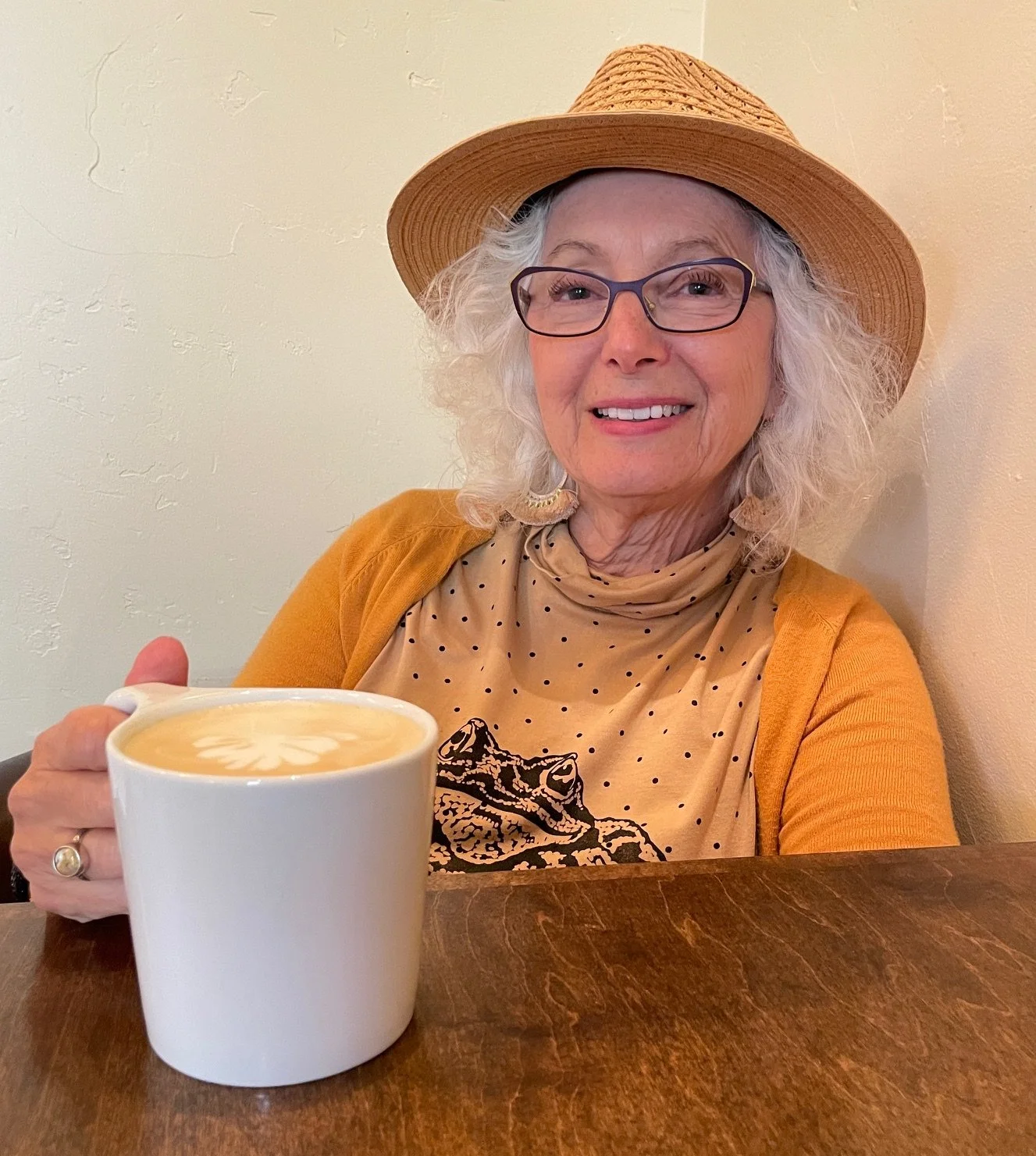
Bio:
Bliss Goldstein’s been published in HuffPost, LA Times, and CALYX Journal, winning their Margarita Donnelly Prize for Prose Writing. She taught writing at Western Washington University and has an MLA from Stanford University. If she's not working on her essay book "How to Be an Asshole," she's most likely hiking in the Pacific Northwest woods among owls, raindrops, and fluorescent fungi. Find more bliss at blissgoldstein.com.
Author's Note:
I was standing in the Dali Museum outside Barcelona watching time melt away like my precious youth. Everywhere I looked surreal images looked back. When I came upon the pendant of a melting watch that I’d lost long ago, I couldn’t take another step. My twenties came flooding back as I remembered the power I used to have just walking down the street. Even my husband of thirty-eight years looks through me now, though on our last day in Spain, he said something so romantic my breath caught. In that moment, I realized young love might be all coltish legs and candlelight, but mature love has its own inexplicable beauty, as strange and haunting as a melting watch.
