How a Quilt Covers a Mountain

Olivia Wang


There is an old Chinese saying that “A father's love is as mighty as a mountain, and a daughter
is a little warm quilt to warm her father’s heart.”

A father’s foundation is not one of waterfalls and roaring rivers. A father’s foundation is
immovable, inaccessible and imposing. He holds up the sky and fears nothing, standing upright
and unyielding. We do not question the mountain’s presence or ask the “why” of it all.

But how does a quilt cover a mountain?

When the mountain disapproves, he threatens to withdraw his shadow, leaving us exposed to
the glaring sun. His silence crumbles into landslides if we do not obey.

But all we see is the sky he is holding and the ground he steadies for us. Or else, he says, it is
inevitable that when we leave the mountain, we will find no ground to stand on and a sky that
could fall; no one to teach us and no one who cares.

I ask my father, why he does this for us if he does not want to?

Most would say this is my first mistake. I say it is my first excavation.

The mountain looks at me and sees me clearly for the first time. I look at him too, my gaze
uncontrollably shifting, trying to focus on his. I see my own reflection in the weathered stone of
his eyes- tiny, foolish, now waiting for the sky to crash down.

But the crash does not come. My words are a dull knife, and for eternity, they seem to have no
effect at all. But then, I see the first fissure: a slight slump in the shoulder that was holding up
the sky. The furrow between his brows twitches, easing.

My words have shredded the skin of the mountain and revealed the man.

“I-” He steps out of the mountain- his voice for once stripped of its majestic echo. He
pauses. “-do not know,” he admits.

And for the first time, the man is small enough to be covered by the quilt.


Author's Note: From family dinners to Chinese exercise books to funerals, the phrase “父爱如山” ("A father's love is a mountain") appeared throughout my childhood, always paired with “母爱似水” ("A mother's love is like water")—the mother's worry and criticism (affection) flowing endlessly like water, the father's silence and stoic bearing like a mountain. But why must a father "bear the weight"?


Olivia Wang is a Chinese American writer and daughter living in Nanjing, China, where she moved from Kentucky when she was four.
Well, you'd expect to see rats in the rails, but one day it was all frogs

K Dulai


You know, I was transporting twenty pounds of chicken. I was strong enough. I picked them up,
freshly cut and packed, from 103rd and Broadway. My school subway pass could take me pretty
much anywhere in the city, so my mom had me pick up the chickens on my way home from
school in Chelsea. They were on sale real cheap, so we had to stock up. Mom made room in the
freezer which involved my dad finishing off a whole lot of Breyer’s butter pecan. He didn’t care
even though it was practically freezer burnt.

Anyhow, the frogs were vibrant, leaping over each other and over the rail trash. Leapfrog, you
know. I started to worry.

Being fourteen and a girl, there were already some men looking my way. I went for it.

“Look down there,” I said. “Do you think we can save them?” At first, the men thought I was
trying to save some rats, but they realized soon enough. The frogs were beautiful–all kinds of
tropical colors. Still, no one was about to climb down there and save them and I had the chickens
to tend to, you know?

Well, as it turned out, the frogs had more leap in them than I gave them credit for. Soon, feeling
the vibrations of the upcoming 9 train, they all jumped up to the subway platform. Hippity hop,
they didn’t trifle with the lascivious men. They just banded together and lifted me and the
chickens up the staircase and onto the street.

I didn’t have a bus pass and I had spent all my money on the poultry, so I started to panic about
getting home.

“Girl,” the frogs all croaked in unison. “You know we wouldn’t just leave you here! You’re
coming with us or we’re going with you, however you want to put it.”

So, they hopped me and the chickens right up to my building on 111th Street, then made their
way along the mica schist wall on 110th, down to Riverside Park and the Hudson after they bid
me adieu.

I don’t know how they made out. I never saw them again, but I’ll tell you one thing–you know
how they say frogs’ legs taste just like chicken? Me, I'm never finding out.


Author’s Statement:
I wrote this piece with feedback and edits by the amazingly generous and talented poet, Jose Hernandez Diaz, in his Surreal/Strange Generative Workshop. The piece centers on memories of growing up using public transportation in my hometown of New York City and of the often perilous journey from the grocery store to home as a teenage girl.


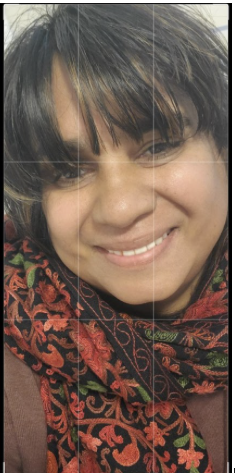
Bio: K Dulai works in nonprofit in the Bay Area of California. She was an Emerging Arts Professionals San Francisco Fellow in 2024. Her work has appeared in Scarlet (Jaded Ibis Press), So to Speak, trampset, Glass: A Journal of Poetry, Pretty Owl Poetry, Drunk Monkeys, The Eastern Iowa Review, and other publications. She is a 2022/2023 Vona Alum and can be found on IG as @kjdulai.